Most travellers to India know about malaria, typhoid and hepatitis A. Japanese encephalitis (JE) gets talked about less, but it is a real risk in India. For most holidaymakers on short, urban-focused trips it is a lower one. What matters is where you go, for how long, when, and what you will be doing.
Quick summary: JE occurs across India, but reported cases are concentrated in Assam and the northeast. On the usual UK tourist routes, reported cases are few, and short urban trips are lower risk. Rural travel, longer stays and the monsoon season raise the risk.
What is Japanese encephalitis?
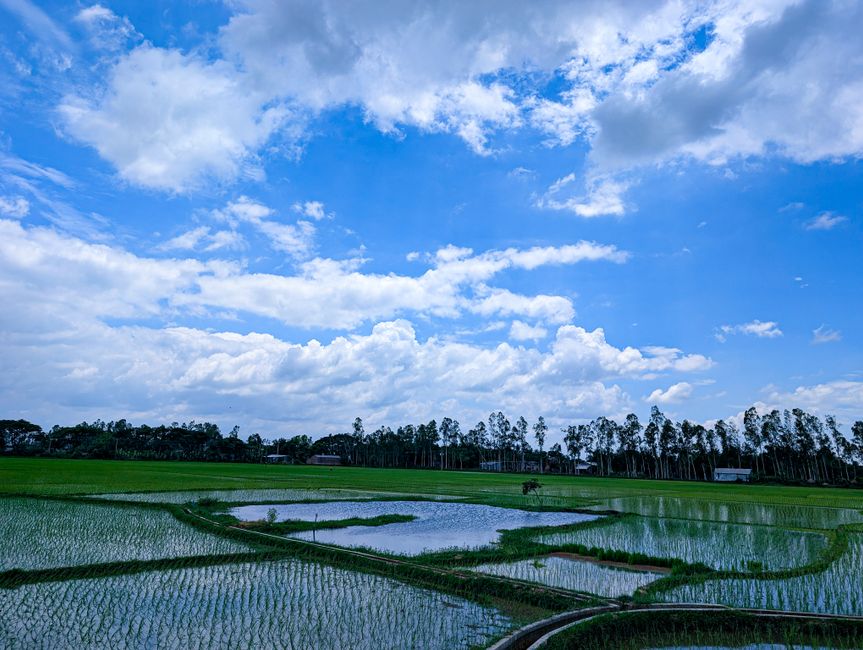
JE is a viral infection of the brain spread by mosquito bites. The mosquitoes bite mainly between dusk and dawn and are found mostly in rural areas, especially near rice fields, swamps and marshes. They become infected by biting pigs or birds carrying the virus. Humans are accidental hosts.
Most infected people have no symptoms or a mild illness. A small minority develop severe encephalitis, with fever, headache, confusion and seizures. There is no specific treatment, only supportive care, and some survivors have lasting neurological problems. Some cases are fatal.
Is Japanese encephalitis found across India?
Yes. UK national guidance (NaTHNaC) describes JE as occurring countrywide in India. Risk is year-round, with peaks during and just after the monsoon, especially in northern regions.
Reported cases are not spread evenly, though. India’s Ministry of Health (through the National Centre for Vector Borne Diseases Control) publishes state-by-state figures. These are reported cases, so true numbers are likely higher.
Reported cases and deaths nationally:
2023: 1,107 cases, 65 deaths
2024: 1,472 cases, 105 deaths
2025: 975 cases, 110 deaths
2026 (provisional, to 31 July): 594 cases, 65 deaths
The 2026 figures are incomplete and will rise, because the transmission season runs well beyond July.
Where reported cases were concentrated in 2025:
Assam: 423 cases, 79 deaths
Meghalaya: 70 cases, 5 deaths
Chhattisgarh: 69 cases, 2 deaths
Tamil Nadu: 65 cases, 0 deaths
Uttar Pradesh: 63 cases, 2 deaths
West Bengal: 40 cases, 7 deaths
Bihar: 28 cases, 5 deaths
Assam alone accounted for roughly 43% of reported cases and about 72% of deaths in 2025. It has also been the site of repeated outbreaks over the past decade, and it again has the most cases in 2026.
What about the places most UK travellers visit?
Most of our travellers go to the Golden Triangle (Delhi, Agra, Jaipur), Rajasthan, Gujarat, Kerala and Punjab. These are not where most reported cases occur.
Delhi: no cases reported from 2018 to mid-2026
Rajasthan: no cases listed in the national data
Gujarat: no cases listed in the national data
Punjab: 1 case in 2025, none in 2026 to July
Uttar Pradesh (including Agra): 63 cases across the whole state in 2025. The data does not show where in the state they occurred
Kerala: low but sporadic, with 3 cases in 2025 and 8 in 2026 to July, including some deaths
Few or no reported cases does not mean no risk. Surveillance varies between states, and national guidance still treats the whole country as a risk area. But for a short trip focused on cities and tourist sites, the risk is lower.
Who should consider the JE vaccine?
Current UK guidance says vaccination can be considered if you are:
Staying a month or more in an area where JE occurs during the transmission season
Travelling frequently to JE-affected areas
Unsure about your itinerary, locations, activities or length of stay
Working in a role that exposes you to the virus, such as laboratory work
It can also be considered for shorter trips if your plans increase the risk, for example time around rice fields or pig farms. That includes:
Backpackers and budget travellers who go off the main tourist trail or stay in basic rural accommodation
Village homestays and rural stays, including Kerala backwater trips that are rural rather than resort-based
Volunteers, workers and people visiting family in rural India
A trip of under a month that is mostly urban is generally lower risk.
Japanese encephalitis vaccine at Trustwell Clinic
A JE vaccine is available at Trustwell Clinic. It is usually given as a course of doses over a number of weeks, so do not leave it until the week before you fly. We will confirm the right schedule for you at your consultation. ( 7 days fast schedule available)
The vaccine protects against JE only. It does not protect against dengue, malaria or other mosquito-borne diseases, which are far more common in India.
How to protect yourself from mosquito bites
Whether or not you are vaccinated, avoid bites, especially from dusk to dawn:
Use an effective insect repellent
Wear long, loose clothing in the evening
Sleep under a net or in screened or air-conditioned rooms where possible
The realistic summary
JE occurs across India, but reported cases are concentrated in Assam and the northeast, with others in parts of the east and centre.
On the usual UK routes, reported cases are few, and short urban trips are lower risk.
Risk goes up with rural travel, longer stays, uncertain plans and the monsoon season.
A personal risk assessment based on your itinerary is the best way to decide.
Book a travel consultation at Trustwell Clinic. Aim for at least 4 weeks before you travel.
Sources: National Centre for Vector Borne Diseases Control, Ministry of Health and Family Welfare, India (page updated 8 October 2026; 2026 data is provisional). Risk guidance reflects NaTHNaC/TravelHealthPro advice. This article is general information and is not an individual risk assessment.